
Cozy Up with High-Performance In-Blown Insulation
Looking for a thermally efficient and cost-effective insulation solution for your home or commercial building? Upstate Spray Foam & HVAC offers specialized in-blown insulation systems that deliver superior performance, reduce energy costs, and make your indoor spaces more comfortable and quiet.
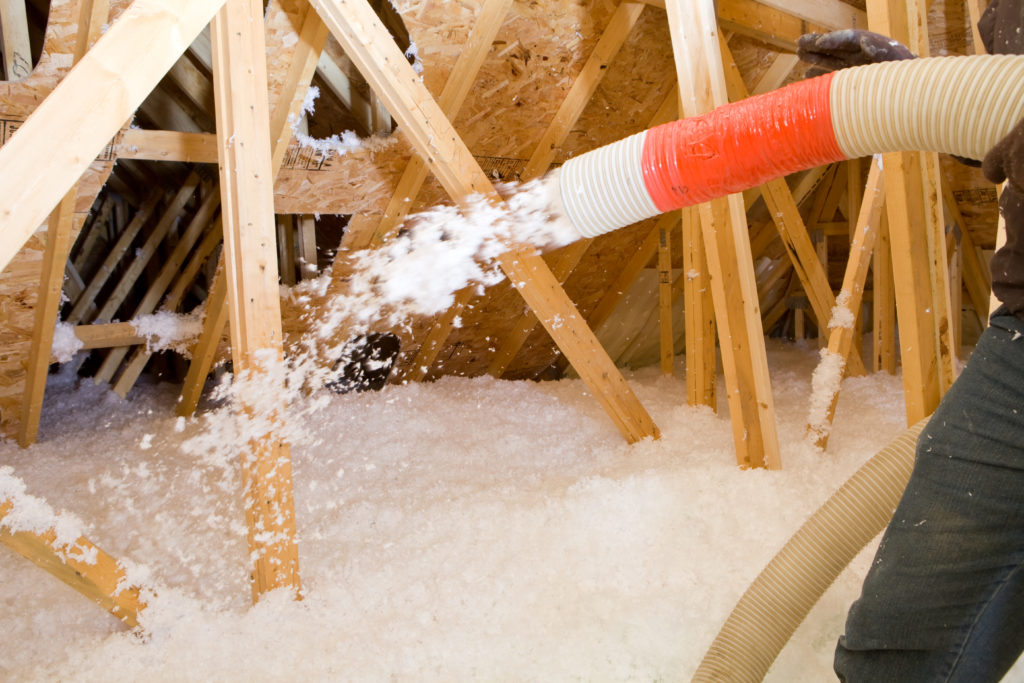
High-Density Blown-In Insulation Delivers Unmatched Performance
Our high-density blown-in fiberglass insulation is a premium choice for closed-cavity applications in new construction or existing homes with exposed stud cavities.
The key to its superior performance lies in the installation method: the fiberglass material is pneumatically installed behind a special non-woven fabric, creating a custom-fit, seamless blanket of insulation. This high-dense pack (often called dense packing) ensures the material will not settle or sag over time, maintaining a consistent R-value for the life of your home.
How High-Density Blown-In Insulation Works
Seamless Fit
Blown completely around all obstructions (outlets, plumbing, etc.), it prevents the small gaps that lower the effective R-value.
Superior R-Value
Delivers an impressive thermal rating, achieving R-15 in 2" x 4" walls and R-23 in 2" x 6" construction.
Acoustical Benefits
Beyond thermal efficiency, this high-density application provides excellent sound-dampening to reduce exterior noise.
Key Benefits of High-Density Blown-In
| Feature | Benefit |
|---|---|
| Consistent R-Value | Maintains thermal efficiency by eliminating gaps and voids. |
| Dense Packing | Prevents settling or sagging over time in vertical walls. |
| Non-Combustible | Adds a critical layer of safety to your structure. |
| Limited Lifetime Warranty | Guaranteed for the life of your home, ensuring peace of mind. |
| Non-Corrosive & Moisture-Resistant | Will not degrade over time or absorb moisture. |
Blown-In Insulations is installed only by our certified contractors in accordance with manufacturer’s strict standards.
Insulating Existing Sidewalls Boosting Comfort in Your Current Home
For existing homes where stud cavities are not exposed, we offer a similar high-performance, pneumatically blown fiberglass or cellulose application for retro-fit situations. This process relies on dense packing to ensure complete, effective coverage.
Installation Process for Sidewalls
Our expert crews are thoroughly trained to insulate your walls with minimal disruption.
- Siding Removal: Rows of siding are carefully removed above and below windows. We never drill through your siding.
- Cavity Access: We drill through the sheathing (under the siding) to access the wall cavities.
- Dense Packing: A tube/hose is inserted, and the blow-in insulation is installed to a high density. This dense packing fills every void and seals air movement within the wall.
- Sealing & Reinstallation: The access holes are plugged and sealed, and the siding is reinstalled to its original condition.
Experience the Benefits
The most common feedback we receive is that homes maintain temperature for a much longer time. Your furnace or AC unit runs less, saving you money!
- Eliminate Drafts: Enjoy consistent temperatures throughout your home.
- Reduced Noise: Significantly cut down on outdoor and road noise.
- Warmer Cabinets & Closets: Reduce cold spots throughout your living space.
FAQs
Our crews are thoroughly trained to handle all types of siding, including vinyl, wood (clapboards), aluminum, cement board, cedar shakes, board-and-batt, etc. We have not yet encountered any siding that has prevented us from insulating walls effectively.
Contrary to some other contractors, we do not drill through your siding to access the wall cavities. Our crews remove the siding in rows to access the wall cavities, and reinstall the siding to original condition afterward.
As long as we are able to make a thorough inspection inside the home, we are able to effectively insulate your walls without damaging or cracking your walls. Common wall materials, such as sheetrock/drywall and lathe/plaster, provide more than enough strength to withstand the pressure of the new insulation.